•  
Surrender of Weapons from Palestinian Camps to The Lebanese Army - Tyre

Surrender of Weapons from Palestinian Camps to The Lebanese Army - Tyre

Lebanese army soldiers oversee the handover of a batch of weapons from Palestinian camps of Rashidieh, el-Buss, and Burj Al-Shemali in the city of Tyre, Lebanon on August 28, 2025. Lebanon on Thursday conducted the second phase of transferring weapons from Palestinian camps in the country to the Lebanese army, according to Lebanese media and Palestinian sources. Photo by Ali Hashisho/Xinhua/ABACAPRESS.COM

  •  
Surrender of Weapons from Palestinian Camps to The Lebanese Army - Tyre

Surrender of Weapons from Palestinian Camps to The Lebanese Army - Tyre

Lebanese army soldiers oversee the handover of a batch of weapons from Palestinian camps of Rashidieh, el-Buss, and Burj Al-Shemali in the city of Tyre, Lebanon on August 28, 2025. Lebanon on Thursday conducted the second phase of transferring weapons from Palestinian camps in the country to the Lebanese army, according to Lebanese media and Palestinian sources. Photo by Ali Hashisho/Xinhua/ABACAPRESS.COM

  •  
Surrender of Weapons from Palestinian Camps to The Lebanese Army - Tyre

Surrender of Weapons from Palestinian Camps to The Lebanese Army - Tyre

Lebanese army soldiers oversee the handover of a batch of weapons from Palestinian camps of Rashidieh, el-Buss, and Burj Al-Shemali in the city of Tyre, Lebanon on August 28, 2025. Lebanon on Thursday conducted the second phase of transferring weapons from Palestinian camps in the country to the Lebanese army, according to Lebanese media and Palestinian sources. Photo by Ali Hashisho/Xinhua/ABACAPRESS.COM

  •  
Preserving Tradition And Innovating Duck Culture - Bejing

Preserving Tradition And Innovating Duck Culture - Bejing

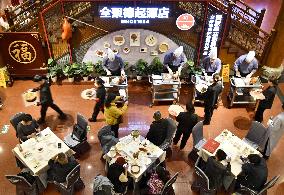
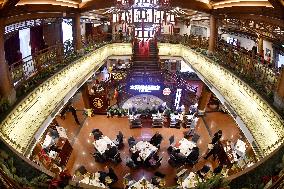
B Customers have meals at the first-ever store of Quanjude on the Qianmen Street in Beijing, capital of China, March 25, 2025. Peking Duck, a representative cuisine of Beijing, has won popularity across the world for its golden, crispy skin and juicy, flavorful meat. Set up by Yang Quanren in 1864 in Beijing, "Quanjude", a time-honored brand for Peking duck, has become a must-go for visitors from both home and abroad. In 2008, Quanjude's craft of making Peking Duck was listed in the second batch of national intangible cultural heritages. The cooking craft of Peking Duck, which has been passed down for seven generations in Quanjude, is mainly used in two steps, preparation and roasting. To ensure the quality of its duck, Quanjude only chooses a type of local ducks which are fed and raised in a special way so that the proportion of the fat in the duck meat is strictly under control. During the roasting procedure, Quanjude uses wood from hard fruit trees and open fire to get a better taste. Meanwhile, the chef w

  •  
Preserving Tradition And Innovating Duck Culture - Bejing

Preserving Tradition And Innovating Duck Culture - Bejing

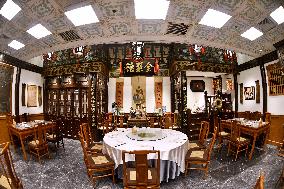
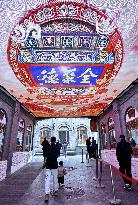
B This photo taken on March 25, 2025 shows the replica of an old Quanjude store at its first-ever store on the Qianmen Street in Beijing, capital of China, March 25, 2025. Peking Duck, a representative cuisine of Beijing, has won popularity across the world for its golden, crispy skin and juicy, flavorful meat. Set up by Yang Quanren in 1864 in Beijing, "Quanjude", a time-honored brand for Peking duck, has become a must-go for visitors from both home and abroad. In 2008, Quanjude's craft of making Peking Duck was listed in the second batch of national intangible cultural heritages. The cooking craft of Peking Duck, which has been passed down for seven generations in Quanjude, is mainly used in two steps, preparation and roasting. To ensure the quality of its duck, Quanjude only chooses a type of local ducks which are fed and raised in a special way so that the proportion of the fat in the duck meat is strictly under control. During the roasting procedure, Quanjude uses wood from hard fruit trees and open fire

  •  
Preserving Tradition And Innovating Duck Culture - Bejing

Preserving Tradition And Innovating Duck Culture - Bejing

B A chef learns the dish presentation at the Hepingmen store of Quanjude in Beijing, capital of China, March 13, 2025. Peking Duck, a representative cuisine of Beijing, has won popularity across the world for its golden, crispy skin and juicy, flavorful meat. Set up by Yang Quanren in 1864 in Beijing, "Quanjude", a time-honored brand for Peking duck, has become a must-go for visitors from both home and abroad. In 2008, Quanjude's craft of making Peking Duck was listed in the second batch of national intangible cultural heritages. The cooking craft of Peking Duck, which has been passed down for seven generations in Quanjude, is mainly used in two steps, preparation and roasting. To ensure the quality of its duck, Quanjude only chooses a type of local ducks which are fed and raised in a special way so that the proportion of the fat in the duck meat is strictly under control. During the roasting procedure, Quanjude uses wood from hard fruit trees and open fire to get a better taste. Meanwhile, the chef will also

  •  
Preserving Tradition And Innovating Duck Culture - Bejing

Preserving Tradition And Innovating Duck Culture - Bejing

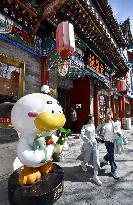
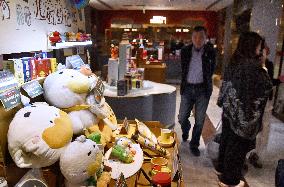
B A mascot of Quanjude is displayed at the entrance of an experience store of Quanjude on the Qianmen Street in Beijing, capital of China, March 25, 2025. Peking Duck, a representative cuisine of Beijing, has won popularity across the world for its golden, crispy skin and juicy, flavorful meat. Set up by Yang Quanren in 1864 in Beijing, "Quanjude", a time-honored brand for Peking duck, has become a must-go for visitors from both home and abroad. In 2008, Quanjude's craft of making Peking Duck was listed in the second batch of national intangible cultural heritages. The cooking craft of Peking Duck, which has been passed down for seven generations in Quanjude, is mainly used in two steps, preparation and roasting. To ensure the quality of its duck, Quanjude only chooses a type of local ducks which are fed and raised in a special way so that the proportion of the fat in the duck meat is strictly under control. During the roasting procedure, Quanjude uses wood from hard fruit trees and open fire to get a better

  •  
Preserving Tradition And Innovating Duck Culture - Bejing

Preserving Tradition And Innovating Duck Culture - Bejing

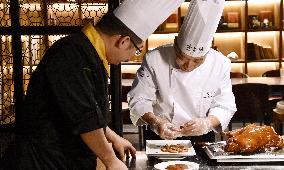
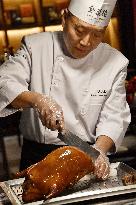
B A chef prepares to slice Peking Duck for customers at the Hepingmen store of Quanjude in Beijing, capital of China, March 13, 2025. Peking Duck, a representative cuisine of Beijing, has won popularity across the world for its golden, crispy skin and juicy, flavorful meat. Set up by Yang Quanren in 1864 in Beijing, "Quanjude", a time-honored brand for Peking duck, has become a must-go for visitors from both home and abroad. In 2008, Quanjude's craft of making Peking Duck was listed in the second batch of national intangible cultural heritages. The cooking craft of Peking Duck, which has been passed down for seven generations in Quanjude, is mainly used in two steps, preparation and roasting. To ensure the quality of its duck, Quanjude only chooses a type of local ducks which are fed and raised in a special way so that the proportion of the fat in the duck meat is strictly under control. During the roasting procedure, Quanjude uses wood from hard fruit trees and open fire to get a better taste. Meanwhile, the

  •  
Preserving Tradition And Innovating Duck Culture - Bejing

Preserving Tradition And Innovating Duck Culture - Bejing

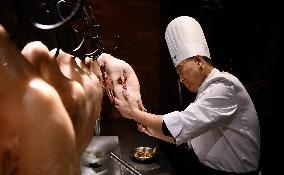
B Wu Yubo prepares the duck at the Hepingmen store of Quanjude in Beijing, capital of China, March 13, 2025. Peking Duck, a representative cuisine of Beijing, has won popularity across the world for its golden, crispy skin and juicy, flavorful meat. Set up by Yang Quanren in 1864 in Beijing, "Quanjude", a time-honored brand for Peking duck, has become a must-go for visitors from both home and abroad. In 2008, Quanjude's craft of making Peking Duck was listed in the second batch of national intangible cultural heritages. The cooking craft of Peking Duck, which has been passed down for seven generations in Quanjude, is mainly used in two steps, preparation and roasting. To ensure the quality of its duck, Quanjude only chooses a type of local ducks which are fed and raised in a special way so that the proportion of the fat in the duck meat is strictly under control. During the roasting procedure, Quanjude uses wood from hard fruit trees and open fire to get a better taste. Meanwhile, the chef will also use a lon

  •  
Preserving Tradition And Innovating Duck Culture - Bejing

Preserving Tradition And Innovating Duck Culture - Bejing

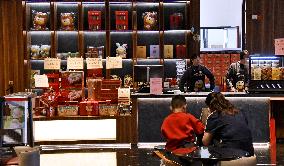
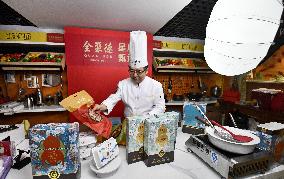
B Cultural creative products are displayed at the Hepingmen store of Quanjude in Beijing, capital of China, March 13, 2025. Peking Duck, a representative cuisine of Beijing, has won popularity across the world for its golden, crispy skin and juicy, flavorful meat. Set up by Yang Quanren in 1864 in Beijing, "Quanjude", a time-honored brand for Peking duck, has become a must-go for visitors from both home and abroad. In 2008, Quanjude's craft of making Peking Duck was listed in the second batch of national intangible cultural heritages. The cooking craft of Peking Duck, which has been passed down for seven generations in Quanjude, is mainly used in two steps, preparation and roasting. To ensure the quality of its duck, Quanjude only chooses a type of local ducks which are fed and raised in a special way so that the proportion of the fat in the duck meat is strictly under control. During the roasting procedure, Quanjude uses wood from hard fruit trees and open fire to get a better taste. Meanwhile, the chef will

  •  
Preserving Tradition And Innovating Duck Culture - Bejing

Preserving Tradition And Innovating Duck Culture - Bejing

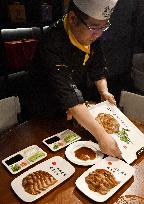
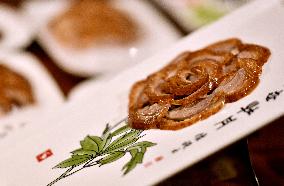
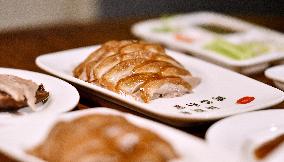
B A plate of sliced Peking Duck is displayed at the Hepingmen store of Quanjude in Beijing, capital of China, March 13, 2025. Peking Duck, a representative cuisine of Beijing, has won popularity across the world for its golden, crispy skin and juicy, flavorful meat. Set up by Yang Quanren in 1864 in Beijing, "Quanjude", a time-honored brand for Peking duck, has become a must-go for visitors from both home and abroad. In 2008, Quanjude's craft of making Peking Duck was listed in the second batch of national intangible cultural heritages. The cooking craft of Peking Duck, which has been passed down for seven generations in Quanjude, is mainly used in two steps, preparation and roasting. To ensure the quality of its duck, Quanjude only chooses a type of local ducks which are fed and raised in a special way so that the proportion of the fat in the duck meat is strictly under control. During the roasting procedure, Quanjude uses wood from hard fruit trees and open fire to get a better taste. Meanwhile, the chef wi

  •  
Preserving Tradition And Innovating Duck Culture - Bejing

Preserving Tradition And Innovating Duck Culture - Bejing

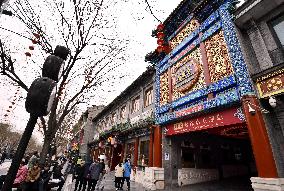
B People walk to the first-ever store of Quanjude on the Qianmen Street in Beijing, capital of China, March 14, 2025. Peking Duck, a representative cuisine of Beijing, has won popularity across the world for its golden, crispy skin and juicy, flavorful meat. Set up by Yang Quanren in 1864 in Beijing, "Quanjude", a time-honored brand for Peking duck, has become a must-go for visitors from both home and abroad. In 2008, Quanjude's craft of making Peking Duck was listed in the second batch of national intangible cultural heritages. The cooking craft of Peking Duck, which has been passed down for seven generations in Quanjude, is mainly used in two steps, preparation and roasting. To ensure the quality of its duck, Quanjude only chooses a type of local ducks which are fed and raised in a special way so that the proportion of the fat in the duck meat is strictly under control. During the roasting procedure, Quanjude uses wood from hard fruit trees and open fire to get a better taste. Meanwhile, the chef will also

  •  
Preserving Tradition And Innovating Duck Culture - Bejing

Preserving Tradition And Innovating Duck Culture - Bejing

B Wu Yubo shows the skills of roasting ducks at the Hepingmen store of Quanjude in Beijing, capital of China, March 13, 2025. Peking Duck, a representative cuisine of Beijing, has won popularity across the world for its golden, crispy skin and juicy, flavorful meat. Set up by Yang Quanren in 1864 in Beijing, "Quanjude", a time-honored brand for Peking duck, has become a must-go for visitors from both home and abroad. In 2008, Quanjude's craft of making Peking Duck was listed in the second batch of national intangible cultural heritages. The cooking craft of Peking Duck, which has been passed down for seven generations in Quanjude, is mainly used in two steps, preparation and roasting. To ensure the quality of its duck, Quanjude only chooses a type of local ducks which are fed and raised in a special way so that the proportion of the fat in the duck meat is strictly under control. During the roasting procedure, Quanjude uses wood from hard fruit trees and open fire to get a better taste. Meanwhile, the chef wi

  •  
Preserving Tradition And Innovating Duck Culture - Bejing

Preserving Tradition And Innovating Duck Culture - Bejing

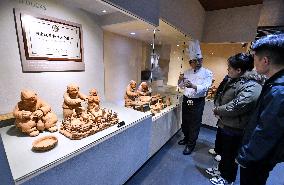
B People visit a museum of Quanjude at the Hepingmen store of Quanjude in Beijing, capital of China, March 13, 2025. Peking Duck, a representative cuisine of Beijing, has won popularity across the world for its golden, crispy skin and juicy, flavorful meat. Set up by Yang Quanren in 1864 in Beijing, "Quanjude", a time-honored brand for Peking duck, has become a must-go for visitors from both home and abroad. In 2008, Quanjude's craft of making Peking Duck was listed in the second batch of national intangible cultural heritages. The cooking craft of Peking Duck, which has been passed down for seven generations in Quanjude, is mainly used in two steps, preparation and roasting. To ensure the quality of its duck, Quanjude only chooses a type of local ducks which are fed and raised in a special way so that the proportion of the fat in the duck meat is strictly under control. During the roasting procedure, Quanjude uses wood from hard fruit trees and open fire to get a better taste. Meanwhile, the chef will also u

  •  
Preserving Tradition And Innovating Duck Culture - Bejing

Preserving Tradition And Innovating Duck Culture - Bejing

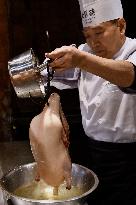
B Wu Yubo prepares a duck at the Hepingmen store of Quanjude in Beijing, capital of China, March 13, 2025. Peking Duck, a representative cuisine of Beijing, has won popularity across the world for its golden, crispy skin and juicy, flavorful meat. Set up by Yang Quanren in 1864 in Beijing, "Quanjude", a time-honored brand for Peking duck, has become a must-go for visitors from both home and abroad. In 2008, Quanjude's craft of making Peking Duck was listed in the second batch of national intangible cultural heritages. The cooking craft of Peking Duck, which has been passed down for seven generations in Quanjude, is mainly used in two steps, preparation and roasting. To ensure the quality of its duck, Quanjude only chooses a type of local ducks which are fed and raised in a special way so that the proportion of the fat in the duck meat is strictly under control. During the roasting procedure, Quanjude uses wood from hard fruit trees and open fire to get a better taste. Meanwhile, the chef will also use a long

  •  
Preserving Tradition And Innovating Duck Culture - Bejing

Preserving Tradition And Innovating Duck Culture - Bejing

B The first-ever store of Quanjude is seen on the Qianmen Street in Beijing, capital of China, March 14, 2025. Peking Duck, a representative cuisine of Beijing, has won popularity across the world for its golden, crispy skin and juicy, flavorful meat. Set up by Yang Quanren in 1864 in Beijing, "Quanjude", a time-honored brand for Peking duck, has become a must-go for visitors from both home and abroad. In 2008, Quanjude's craft of making Peking Duck was listed in the second batch of national intangible cultural heritages. The cooking craft of Peking Duck, which has been passed down for seven generations in Quanjude, is mainly used in two steps, preparation and roasting. To ensure the quality of its duck, Quanjude only chooses a type of local ducks which are fed and raised in a special way so that the proportion of the fat in the duck meat is strictly under control. During the roasting procedure, Quanjude uses wood from hard fruit trees and open fire to get a better taste. Meanwhile, the chef will also use a l

  •  
Preserving Tradition And Innovating Duck Culture - Bejing

Preserving Tradition And Innovating Duck Culture - Bejing

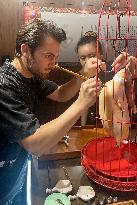
B Wu Yubo (L) teaches his apprentice to prepare ducks at the Hepingmen store of Quanjude in Beijing, capital of China, March 13, 2025. Peking Duck, a representative cuisine of Beijing, has won popularity across the world for its golden, crispy skin and juicy, flavorful meat. Set up by Yang Quanren in 1864 in Beijing, "Quanjude", a time-honored brand for Peking duck, has become a must-go for visitors from both home and abroad. In 2008, Quanjude's craft of making Peking Duck was listed in the second batch of national intangible cultural heritages. The cooking craft of Peking Duck, which has been passed down for seven generations in Quanjude, is mainly used in two steps, preparation and roasting. To ensure the quality of its duck, Quanjude only chooses a type of local ducks which are fed and raised in a special way so that the proportion of the fat in the duck meat is strictly under control. During the roasting procedure, Quanjude uses wood from hard fruit trees and open fire to get a better taste. Meanwhile, th

  •  
Preserving Tradition And Innovating Duck Culture - Bejing

Preserving Tradition And Innovating Duck Culture - Bejing

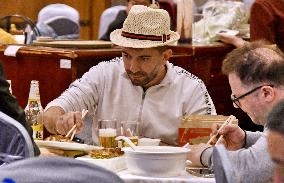
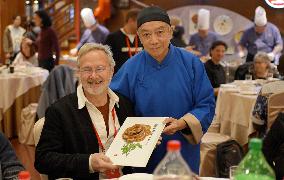
B A foreign guest eats Peking Duck at the first-ever store of Quanjude on the Qianmen Street in Beijing, capital of China, March 25, 2025. Peking Duck, a representative cuisine of Beijing, has won popularity across the world for its golden, crispy skin and juicy, flavorful meat. Set up by Yang Quanren in 1864 in Beijing, "Quanjude", a time-honored brand for Peking duck, has become a must-go for visitors from both home and abroad. In 2008, Quanjude's craft of making Peking Duck was listed in the second batch of national intangible cultural heritages. The cooking craft of Peking Duck, which has been passed down for seven generations in Quanjude, is mainly used in two steps, preparation and roasting. To ensure the quality of its duck, Quanjude only chooses a type of local ducks which are fed and raised in a special way so that the proportion of the fat in the duck meat is strictly under control. During the roasting procedure, Quanjude uses wood from hard fruit trees and open fire to get a better taste. Meanwhile

  •  
Preserving Tradition And Innovating Duck Culture - Bejing

Preserving Tradition And Innovating Duck Culture - Bejing

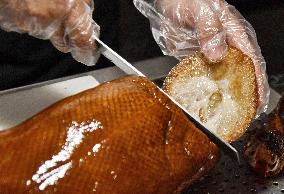
B Wu Yubo shows how to slice a duck at the Hepingmen store of Quanjude in Beijing, capital of China, March 13, 2025. Peking Duck, a representative cuisine of Beijing, has won popularity across the world for its golden, crispy skin and juicy, flavorful meat. Set up by Yang Quanren in 1864 in Beijing, "Quanjude", a time-honored brand for Peking duck, has become a must-go for visitors from both home and abroad. In 2008, Quanjude's craft of making Peking Duck was listed in the second batch of national intangible cultural heritages. The cooking craft of Peking Duck, which has been passed down for seven generations in Quanjude, is mainly used in two steps, preparation and roasting. To ensure the quality of its duck, Quanjude only chooses a type of local ducks which are fed and raised in a special way so that the proportion of the fat in the duck meat is strictly under control. During the roasting procedure, Quanjude uses wood from hard fruit trees and open fire to get a better taste. Meanwhile, the chef will also u

  •  
Preserving Tradition And Innovating Duck Culture - Bejing

Preserving Tradition And Innovating Duck Culture - Bejing

B Wu Yubo teaches his apprentice to arrange a plate at the Hepingmen store of Quanjude in Beijing, capital of China, March 13, 2025. Peking Duck, a representative cuisine of Beijing, has won popularity across the world for its golden, crispy skin and juicy, flavorful meat. Set up by Yang Quanren in 1864 in Beijing, "Quanjude", a time-honored brand for Peking duck, has become a must-go for visitors from both home and abroad. In 2008, Quanjude's craft of making Peking Duck was listed in the second batch of national intangible cultural heritages. The cooking craft of Peking Duck, which has been passed down for seven generations in Quanjude, is mainly used in two steps, preparation and roasting. To ensure the quality of its duck, Quanjude only chooses a type of local ducks which are fed and raised in a special way so that the proportion of the fat in the duck meat is strictly under control. During the roasting procedure, Quanjude uses wood from hard fruit trees and open fire to get a better taste. Meanwhile, the

  •  
Preserving Tradition And Innovating Duck Culture - Bejing

Preserving Tradition And Innovating Duck Culture - Bejing

B A chef prepares to promote Peking Duck through online streaming at the Hepingmen store of Quanjude in Beijing, capital of China, March 13, 2025. Peking Duck, a representative cuisine of Beijing, has won popularity across the world for its golden, crispy skin and juicy, flavorful meat. Set up by Yang Quanren in 1864 in Beijing, "Quanjude", a time-honored brand for Peking duck, has become a must-go for visitors from both home and abroad. In 2008, Quanjude's craft of making Peking Duck was listed in the second batch of national intangible cultural heritages. The cooking craft of Peking Duck, which has been passed down for seven generations in Quanjude, is mainly used in two steps, preparation and roasting. To ensure the quality of its duck, Quanjude only chooses a type of local ducks which are fed and raised in a special way so that the proportion of the fat in the duck meat is strictly under control. During the roasting procedure, Quanjude uses wood from hard fruit trees and open fire to get a better taste. M

  •  
Preserving Tradition And Innovating Duck Culture - Bejing

Preserving Tradition And Innovating Duck Culture - Bejing

B Customers taste Peking Ducks at the first-ever store of Quanjude on the Qianmen Street in Beijing, capital of China, March 25, 2025. Peking Duck, a representative cuisine of Beijing, has won popularity across the world for its golden, crispy skin and juicy, flavorful meat. Set up by Yang Quanren in 1864 in Beijing, "Quanjude", a time-honored brand for Peking duck, has become a must-go for visitors from both home and abroad. In 2008, Quanjude's craft of making Peking Duck was listed in the second batch of national intangible cultural heritages. The cooking craft of Peking Duck, which has been passed down for seven generations in Quanjude, is mainly used in two steps, preparation and roasting. To ensure the quality of its duck, Quanjude only chooses a type of local ducks which are fed and raised in a special way so that the proportion of the fat in the duck meat is strictly under control. During the roasting procedure, Quanjude uses wood from hard fruit trees and open fire to get a better taste. Meanwhile, th

  •  
Preserving Tradition And Innovating Duck Culture - Bejing

Preserving Tradition And Innovating Duck Culture - Bejing

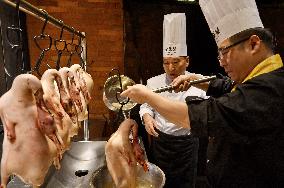
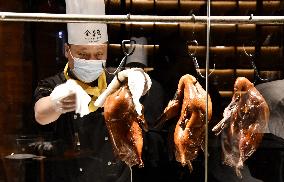
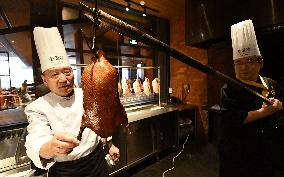
B Wu Yubo takes roasted ducks out of an oven at the Hepingmen store of Quanjude in Beijing, capital of China, March 13, 2025. Peking Duck, a representative cuisine of Beijing, has won popularity across the world for its golden, crispy skin and juicy, flavorful meat. Set up by Yang Quanren in 1864 in Beijing, "Quanjude", a time-honored brand for Peking duck, has become a must-go for visitors from both home and abroad. In 2008, Quanjude's craft of making Peking Duck was listed in the second batch of national intangible cultural heritages. The cooking craft of Peking Duck, which has been passed down for seven generations in Quanjude, is mainly used in two steps, preparation and roasting. To ensure the quality of its duck, Quanjude only chooses a type of local ducks which are fed and raised in a special way so that the proportion of the fat in the duck meat is strictly under control. During the roasting procedure, Quanjude uses wood from hard fruit trees and open fire to get a better taste. Meanwhile, the chef wi

  •  
Preserving Tradition And Innovating Duck Culture - Bejing

Preserving Tradition And Innovating Duck Culture - Bejing

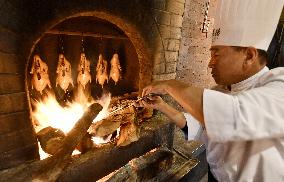
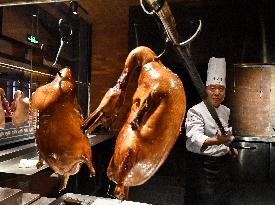
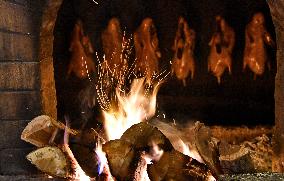
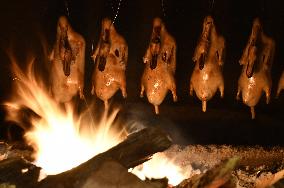
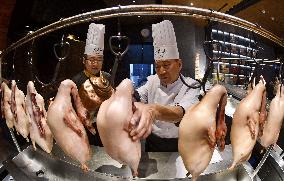
B Ducks are being roasted in an oven at the Hepingmen store of Quanjude in Beijing, capital of China, March 13, 2025. Peking Duck, a representative cuisine of Beijing, has won popularity across the world for its golden, crispy skin and juicy, flavorful meat. Set up by Yang Quanren in 1864 in Beijing, "Quanjude", a time-honored brand for Peking duck, has become a must-go for visitors from both home and abroad. In 2008, Quanjude's craft of making Peking Duck was listed in the second batch of national intangible cultural heritages. The cooking craft of Peking Duck, which has been passed down for seven generations in Quanjude, is mainly used in two steps, preparation and roasting. To ensure the quality of its duck, Quanjude only chooses a type of local ducks which are fed and raised in a special way so that the proportion of the fat in the duck meat is strictly under control. During the roasting procedure, Quanjude uses wood from hard fruit trees and open fire to get a better taste. Meanwhile, the chef will also

  •  
Preserving Tradition And Innovating Duck Culture - Bejing

Preserving Tradition And Innovating Duck Culture - Bejing

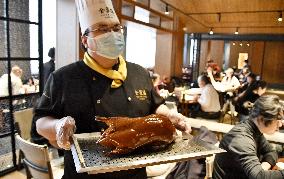
B A chef prepares to slice a roasted duck at the Hepingmen store of Quanjude in Beijing, capital of China, March 13, 2025. Peking Duck, a representative cuisine of Beijing, has won popularity across the world for its golden, crispy skin and juicy, flavorful meat. Set up by Yang Quanren in 1864 in Beijing, "Quanjude", a time-honored brand for Peking duck, has become a must-go for visitors from both home and abroad. In 2008, Quanjude's craft of making Peking Duck was listed in the second batch of national intangible cultural heritages. The cooking craft of Peking Duck, which has been passed down for seven generations in Quanjude, is mainly used in two steps, preparation and roasting. To ensure the quality of its duck, Quanjude only chooses a type of local ducks which are fed and raised in a special way so that the proportion of the fat in the duck meat is strictly under control. During the roasting procedure, Quanjude uses wood from hard fruit trees and open fire to get a better taste. Meanwhile, the chef will

  •  
Preserving Tradition And Innovating Duck Culture - Bejing

Preserving Tradition And Innovating Duck Culture - Bejing

B Ducks are being roasted in an oven at the Hepingmen store of Quanjude in Beijing, capital of China, March 13, 2025. Peking Duck, a representative cuisine of Beijing, has won popularity across the world for its golden, crispy skin and juicy, flavorful meat. Set up by Yang Quanren in 1864 in Beijing, "Quanjude", a time-honored brand for Peking duck, has become a must-go for visitors from both home and abroad. In 2008, Quanjude's craft of making Peking Duck was listed in the second batch of national intangible cultural heritages. The cooking craft of Peking Duck, which has been passed down for seven generations in Quanjude, is mainly used in two steps, preparation and roasting. To ensure the quality of its duck, Quanjude only chooses a type of local ducks which are fed and raised in a special way so that the proportion of the fat in the duck meat is strictly under control. During the roasting procedure, Quanjude uses wood from hard fruit trees and open fire to get a better taste. Meanwhile, the chef will also

  •  
Preserving Tradition And Innovating Duck Culture - Bejing

Preserving Tradition And Innovating Duck Culture - Bejing

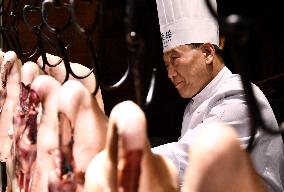
B Wu Yubo checks the prepared duck at the Hepingmen store of Quanjude in Beijing, capital of China, March 13, 2025. Peking Duck, a representative cuisine of Beijing, has won popularity across the world for its golden, crispy skin and juicy, flavorful meat. Set up by Yang Quanren in 1864 in Beijing, "Quanjude", a time-honored brand for Peking duck, has become a must-go for visitors from both home and abroad. In 2008, Quanjude's craft of making Peking Duck was listed in the second batch of national intangible cultural heritages. The cooking craft of Peking Duck, which has been passed down for seven generations in Quanjude, is mainly used in two steps, preparation and roasting. To ensure the quality of its duck, Quanjude only chooses a type of local ducks which are fed and raised in a special way so that the proportion of the fat in the duck meat is strictly under control. During the roasting procedure, Quanjude uses wood from hard fruit trees and open fire to get a better taste. Meanwhile, the chef will also us

  •  
Preserving Tradition And Innovating Duck Culture - Bejing

Preserving Tradition And Innovating Duck Culture - Bejing

B Customers look at cultural creative products of Quanjude at one of its experience stores on the Qianmen Street in Beijing, capital of China, March 25, 2025. Peking Duck, a representative cuisine of Beijing, has won popularity across the world for its golden, crispy skin and juicy, flavorful meat. Set up by Yang Quanren in 1864 in Beijing, "Quanjude", a time-honored brand for Peking duck, has become a must-go for visitors from both home and abroad. In 2008, Quanjude's craft of making Peking Duck was listed in the second batch of national intangible cultural heritages. The cooking craft of Peking Duck, which has been passed down for seven generations in Quanjude, is mainly used in two steps, preparation and roasting. To ensure the quality of its duck, Quanjude only chooses a type of local ducks which are fed and raised in a special way so that the proportion of the fat in the duck meat is strictly under control. During the roasting procedure, Quanjude uses wood from hard fruit trees and open fire to get a bet

  •  
Preserving Tradition And Innovating Duck Culture - Bejing

Preserving Tradition And Innovating Duck Culture - Bejing

B Wu Yubo shows how to slice a duck at the Hepingmen store of Quanjude in Beijing, capital of China, March 13, 2025. Peking Duck, a representative cuisine of Beijing, has won popularity across the world for its golden, crispy skin and juicy, flavorful meat. Set up by Yang Quanren in 1864 in Beijing, "Quanjude", a time-honored brand for Peking duck, has become a must-go for visitors from both home and abroad. In 2008, Quanjude's craft of making Peking Duck was listed in the second batch of national intangible cultural heritages. The cooking craft of Peking Duck, which has been passed down for seven generations in Quanjude, is mainly used in two steps, preparation and roasting. To ensure the quality of its duck, Quanjude only chooses a type of local ducks which are fed and raised in a special way so that the proportion of the fat in the duck meat is strictly under control. During the roasting procedure, Quanjude uses wood from hard fruit trees and open fire to get a better taste. Meanwhile, the chef will also u

  •  
Preserving Tradition And Innovating Duck Culture - Bejing

Preserving Tradition And Innovating Duck Culture - Bejing

B This undated file photo shows a foreign tourist experiencing the making of Peking Duck at the Hepingmen store of Quanjude in Beijing, capital of China. Peking Duck, a representative cuisine of Beijing, has won popularity across the world for its golden, crispy skin and juicy, flavorful meat. Set up by Yang Quanren in 1864 in Beijing, "Quanjude", a time-honored brand for Peking duck, has become a must-go for visitors from both home and abroad. In 2008, Quanjude's craft of making Peking Duck was listed in the second batch of national intangible cultural heritages. The cooking craft of Peking Duck, which has been passed down for seven generations in Quanjude, is mainly used in two steps, preparation and roasting. To ensure the quality of its duck, Quanjude only chooses a type of local ducks which are fed and raised in a special way so that the proportion of the fat in the duck meat is strictly under control. During the roasting procedure, Quanjude uses wood from hard fruit trees and open fire to get a better t

  •  
Preserving Tradition And Innovating Duck Culture - Bejing

Preserving Tradition And Innovating Duck Culture - Bejing

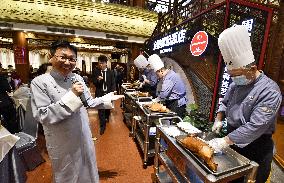
B A staff member introduces the history of Quanjude to customers at its first-ever store on the Qianmen Street in Beijing, capital of China, March 25, 2025. Peking Duck, a representative cuisine of Beijing, has won popularity across the world for its golden, crispy skin and juicy, flavorful meat. Set up by Yang Quanren in 1864 in Beijing, "Quanjude", a time-honored brand for Peking duck, has become a must-go for visitors from both home and abroad. In 2008, Quanjude's craft of making Peking Duck was listed in the second batch of national intangible cultural heritages. The cooking craft of Peking Duck, which has been passed down for seven generations in Quanjude, is mainly used in two steps, preparation and roasting. To ensure the quality of its duck, Quanjude only chooses a type of local ducks which are fed and raised in a special way so that the proportion of the fat in the duck meat is strictly under control. During the roasting procedure, Quanjude uses wood from hard fruit trees and open fire to get a bette

  •  
Preserving Tradition And Innovating Duck Culture - Bejing

Preserving Tradition And Innovating Duck Culture - Bejing

B Wu Yubo checks a roasted duck at the Hepingmen store of Quanjude in Beijing, capital of China, March 13, 2025. Peking Duck, a representative cuisine of Beijing, has won popularity across the world for its golden, crispy skin and juicy, flavorful meat. Set up by Yang Quanren in 1864 in Beijing, "Quanjude", a time-honored brand for Peking duck, has become a must-go for visitors from both home and abroad. In 2008, Quanjude's craft of making Peking Duck was listed in the second batch of national intangible cultural heritages. The cooking craft of Peking Duck, which has been passed down for seven generations in Quanjude, is mainly used in two steps, preparation and roasting. To ensure the quality of its duck, Quanjude only chooses a type of local ducks which are fed and raised in a special way so that the proportion of the fat in the duck meat is strictly under control. During the roasting procedure, Quanjude uses wood from hard fruit trees and open fire to get a better taste. Meanwhile, the chef will also use a

  •  
Preserving Tradition And Innovating Duck Culture - Bejing

Preserving Tradition And Innovating Duck Culture - Bejing

B A plate of sliced Peking Duck is displayed at the Hepingmen store of Quanjude in Beijing, capital of China, March 13, 2025. Peking Duck, a representative cuisine of Beijing, has won popularity across the world for its golden, crispy skin and juicy, flavorful meat. Set up by Yang Quanren in 1864 in Beijing, "Quanjude", a time-honored brand for Peking duck, has become a must-go for visitors from both home and abroad. In 2008, Quanjude's craft of making Peking Duck was listed in the second batch of national intangible cultural heritages. The cooking craft of Peking Duck, which has been passed down for seven generations in Quanjude, is mainly used in two steps, preparation and roasting. To ensure the quality of its duck, Quanjude only chooses a type of local ducks which are fed and raised in a special way so that the proportion of the fat in the duck meat is strictly under control. During the roasting procedure, Quanjude uses wood from hard fruit trees and open fire to get a better taste. Meanwhile, the chef wi

  •  
Preserving Tradition And Innovating Duck Culture - Bejing

Preserving Tradition And Innovating Duck Culture - Bejing

B Wu Yubo (R) teaches his apprentice at the Hepingmen store of Quanjude in Beijing, capital of China, March 13, 2025. Peking Duck, a representative cuisine of Beijing, has won popularity across the world for its golden, crispy skin and juicy, flavorful meat. Set up by Yang Quanren in 1864 in Beijing, "Quanjude", a time-honored brand for Peking duck, has become a must-go for visitors from both home and abroad. In 2008, Quanjude's craft of making Peking Duck was listed in the second batch of national intangible cultural heritages. The cooking craft of Peking Duck, which has been passed down for seven generations in Quanjude, is mainly used in two steps, preparation and roasting. To ensure the quality of its duck, Quanjude only chooses a type of local ducks which are fed and raised in a special way so that the proportion of the fat in the duck meat is strictly under control. During the roasting procedure, Quanjude uses wood from hard fruit trees and open fire to get a better taste. Meanwhile, the chef will also

  •  
Preserving Tradition And Innovating Duck Culture - Bejing

Preserving Tradition And Innovating Duck Culture - Bejing

B This undated file photo shows a foreign tourist posing for photos with a waiter in traditional costumes at the first-ever store of Quanjude on the Qianmen Street in Beijing, capital of China. Peking Duck, a representative cuisine of Beijing, has won popularity across the world for its golden, crispy skin and juicy, flavorful meat. Set up by Yang Quanren in 1864 in Beijing, "Quanjude", a time-honored brand for Peking duck, has become a must-go for visitors from both home and abroad. In 2008, Quanjude's craft of making Peking Duck was listed in the second batch of national intangible cultural heritages. The cooking craft of Peking Duck, which has been passed down for seven generations in Quanjude, is mainly used in two steps, preparation and roasting. To ensure the quality of its duck, Quanjude only chooses a type of local ducks which are fed and raised in a special way so that the proportion of the fat in the duck meat is strictly under control. During the roasting procedure, Quanjude uses wood from hard fru

  •  
Second Batch Of Palestinian Prisoners Arrive In Ramallah

Second Batch Of Palestinian Prisoners Arrive In Ramallah

(250126) -- RAFAH, Jan. 26, 2025 (Xinhua) -- Released Palestinian prisoners are seen aboard a bus that has arrived in Egypt via the Rafah crossing, on Jan. 25, 2025. The International Committee of the Red Cross (ICRC) announced Saturday the completion of the second phase of a prisoner-hostage exchange between Hamas and Israel, implemented under the initial terms of a ceasefire agreement. (Str/Xinhua)

  •  
Second Batch Of Palestinian Prisoners Arrive In Ramallah

Second Batch Of Palestinian Prisoners Arrive In Ramallah

Palestinian prisoners released from the Ofer military prison are greeted upon arrival in the West Bank city of Ramallah, Jan. 25, 2025. The Israeli authorities on Saturday released 200 Palestinian prisoners as part of the second phase of a prisoner exchange deal with Hamas. Photo by Ayman Nobani/Xinhua/AABACAPRESS.COM

  •  
Second Batch Of Palestinian Prisoners Arrive In Ramallah

Second Batch Of Palestinian Prisoners Arrive In Ramallah

Palestinian prisoners released from the Ofer military prison are greeted upon arrival in the West Bank city of Ramallah, Jan. 25, 2025. The Israeli authorities on Saturday released 200 Palestinian prisoners as part of the second phase of a prisoner exchange deal with Hamas. Photo by Ayman Nobani/Xinhua/AABACAPRESS.COM

  •  
Second Batch Of Palestinian Prisoners Arrive In Ramallah

Second Batch Of Palestinian Prisoners Arrive In Ramallah

(250126) -- GAZA, Jan. 26, 2025 (Xinhua) -- A released Palestinian prisoner gestures aboard a vehicle in the southern Gaza Strip city of Khan Younis, on Jan. 25, 2025. The Israeli authorities on Saturday released 200 Palestinian prisoners as part of the second phase of a prisoner exchange deal with Hamas. (Photo by Abdul Rahman Salama/Xinhua)

  •  
Second Batch Of Palestinian Prisoners Arrive In Ramallah

Second Batch Of Palestinian Prisoners Arrive In Ramallah

(250126) -- RAFAH, Jan. 26, 2025 (Xinhua) -- Buses carrying released Palestinian prisoners arrive in Egypt via the Rafah crossing, on Jan. 25, 2025. The International Committee of the Red Cross (ICRC) announced Saturday the completion of the second phase of a prisoner-hostage exchange between Hamas and Israel, implemented under the initial terms of a ceasefire agreement. (Str/Xinhua)

  •  
Second Batch Of Palestinian Prisoners Arrive In Ramallah

Second Batch Of Palestinian Prisoners Arrive In Ramallah

Palestinian prisoners released from the Ofer military prison are greeted upon arrival in the West Bank city of Ramallah, Jan. 25, 2025. The Israeli authorities on Saturday released 200 Palestinian prisoners as part of the second phase of a prisoner exchange deal with Hamas. Photo by Ayman Nobani/Xinhua/AABACAPRESS.COM

  •  
Second Batch Of Palestinian Prisoners Arrive In Ramallah

Second Batch Of Palestinian Prisoners Arrive In Ramallah

One of the Palestinian prisoners released by Israel reacts while being carried on people's shoulders after disembarking off one of the buses of the International Committee of the Red Cross (ICRC) upon arrival in Ramallah in the occupied West Bank on January 25, 2025. Palestinian militants and Israel carried out a hostage-prisoner swap on January 25 under a Gaza ceasefire deal, but a last-minute dispute blocked the expected return of hundreds of thousands of Palestinians to devastated northern Gaza. Photo by Mohammad Nazal/Middle East Images/AABACAPRESS.COM

  •  
Second Batch Of Palestinian Prisoners Arrive In Ramallah

Second Batch Of Palestinian Prisoners Arrive In Ramallah

A Palestinian prisoner released by Israel reacts as he is carried on a person's shoulder after disembarking from an International Committee of the Red Cross (ICRC) bus after arriving in Ramallah in the occupied West Bank on January 25, 2025. Palestinian militants and Israel exchanged hostages and prisoners on January 25 under a Gaza ceasefire agreement, but a last-minute dispute prevented hundreds of thousands of Palestinians from returning to devastated northern Gaza. Photo by Mohammad Nazal/Middle East Images/AABACAPRESS.COM

  •  
Second Batch Of Palestinian Prisoners Arrive In Ramallah

Second Batch Of Palestinian Prisoners Arrive In Ramallah

One of the Palestinian prisoners released by Israel gestures while being carried on a person's shoulder after disembarking off one of the buses of the International Committee of the Red Cross (ICRC) upon arrival in Ramallah in the occupied West Bank on January 25, 2025. Palestinian militants and Israel carried out a hostage-prisoner swap on January 25 under a Gaza ceasefire deal, but a last-minute dispute blocked the expected return of hundreds of thousands of Palestinians to devastated northern Gaza. Photo by Mohammad Nazal/Middle East Images/AABACAPRESS.COM

  •  
Second Batch Of Palestinian Prisoners Arrive In Ramallah

Second Batch Of Palestinian Prisoners Arrive In Ramallah

One of the Palestinian prisoners released by Israel gestures while being carried on a person's shoulder after disembarking off one of the buses of the International Committee of the Red Cross (ICRC) upon arrival in Ramallah in the occupied West Bank on January 25, 2025. Palestinian militants and Israel carried out a hostage-prisoner swap on January 25 under a Gaza ceasefire deal, but a last-minute dispute blocked the expected return of hundreds of thousands of Palestinians to devastated northern Gaza. Photo by Mohammad Nazal/Middle East Images/AABACAPRESS.COM

  •  
Second Batch Of Palestinian Prisoners Arrive In Ramallah

Second Batch Of Palestinian Prisoners Arrive In Ramallah

One of the Palestinian prisoners released by Israel reacts while being carried on people's shoulders after disembarking off one of the buses of the International Committee of the Red Cross (ICRC) upon arrival in Ramallah in the occupied West Bank on January 25, 2025. Palestinian militants and Israel carried out a hostage-prisoner swap on January 25 under a Gaza ceasefire deal, but a last-minute dispute blocked the expected return of hundreds of thousands of Palestinians to devastated northern Gaza. Photo by Mohammad Nazal/Middle East Images/AABACAPRESS.COM

  •  
Second Batch Of Palestinian Prisoners Arrive In Ramallah

Second Batch Of Palestinian Prisoners Arrive In Ramallah

One of the Palestinian prisoners released by Israel gestures while being carried on a person's shoulder after disembarking off one of the buses of the International Committee of the Red Cross (ICRC) upon arrival in Ramallah in the occupied West Bank on January 25, 2025. Palestinian militants and Israel carried out a hostage-prisoner swap on January 25 under a Gaza ceasefire deal, but a last-minute dispute blocked the expected return of hundreds of thousands of Palestinians to devastated northern Gaza. Photo by Mohammad Nazal/Middle East Images/AABACAPRESS.COM

  •  
Second Batch Of Palestinian Prisoners Arrive In Ramallah

Second Batch Of Palestinian Prisoners Arrive In Ramallah

One of the Palestinian prisoners released by Israel gestures while being carried on a person's shoulder after disembarking off one of the buses of the International Committee of the Red Cross (ICRC) upon arrival in Ramallah in the occupied West Bank on January 25, 2025. Palestinian militants and Israel carried out a hostage-prisoner swap on January 25 under a Gaza ceasefire deal, but a last-minute dispute blocked the expected return of hundreds of thousands of Palestinians to devastated northern Gaza. Photo by Mohammad Nazal/Middle East Images/AABACAPRESS.COM

  •  
Second Batch Of Palestinian Prisoners Arrive In Ramallah

Second Batch Of Palestinian Prisoners Arrive In Ramallah

One of the Palestinian prisoners released by Israel gestures while being carried on a person's shoulder after disembarking off one of the buses of the International Committee of the Red Cross (ICRC) upon arrival in Ramallah in the occupied West Bank on January 25, 2025. Palestinian militants and Israel carried out a hostage-prisoner swap on January 25 under a Gaza ceasefire deal, but a last-minute dispute blocked the expected return of hundreds of thousands of Palestinians to devastated northern Gaza. Photo by Mohammad Nazal/Middle East Images/AABACAPRESS.COM

  •  
Second Batch Of Palestinian Prisoners Arrive In Ramallah

Second Batch Of Palestinian Prisoners Arrive In Ramallah

One of the Palestinian prisoners released by Israel reacts while being carried on people's shoulders after disembarking off one of the buses of the International Committee of the Red Cross (ICRC) upon arrival in Ramallah in the occupied West Bank on January 25, 2025. Palestinian militants and Israel carried out a hostage-prisoner swap on January 25 under a Gaza ceasefire deal, but a last-minute dispute blocked the expected return of hundreds of thousands of Palestinians to devastated northern Gaza. Photo by Mohammad Nazal/Middle East Images/AABACAPRESS.COM

  • Main
  • Top
  • Editorial
  • Creative
  • About Us
  • About ILG
  • Terms of use
  • Company
  • BEHIND
  • Price List
  • Single Plan
  • Monthly Plan
  • Services
  • Shooting
  • Rights Clearance
  • Support
  • FAQ
  • How To Buy
  • Contact Us
  • Become a Partner

© KYODO NEWS IMAGES INC

All Rights Reserved.

  • Editorial
  • Olympics
  • News
  • Sports
  • Japan
  • Tech
  • Royal
  • Disaster
  • NorthKorea
  • Old Japan
  • SNS

  • Creative
  • Food
  • Japan
  • Landscape
  • Animal
  • Popular
  • #Ukraine
  • #Thailand
  • #coronavirus
  • #N. Korea
  • #Russia
  • #China
  • #Ukraine
  • #Thailand
  • #coronavirus
  • #N. Korea
  • #Russia
  • #China
  • Food
  • Japan
  • Landscape
  • Animal
  • Olympics
  • News
  • Sports
  • Japan
  • Tech
  • Royal
  • Disaster
  • NorthKorea
  • Old Japan
  • SNS